Network marketing · From LinkedIn
You Can Love Your Career and Still Want More
Why building something of your own—and finding the right people to build with—deserves a place in the conversation about success.
Read the LinkedIn articleOriginally published on LinkedIn .

A good career can be a source of pride without being the limit of your ambition. You can appreciate your work, respect the people beside you, and feel grateful for what you have accomplished while still wondering what else you might be capable of building. That question does not always arrive during a crisis. Sometimes it appears in the quiet after a productive day, when the immediate responsibilities have been met and there is finally room to consider a possibility that has been waiting for your attention. Your life is not falling apart. You simply recognize that you may have more to contribute.
I understand that distinction. As an airline captain, I take pride in a profession that demands preparation, judgment, and responsibility. Aviation is a significant part of my life, but it is not the only place where I want to contribute. I also write, study leadership, and build in network marketing. Those interests do not diminish my commitment to flying. They reflect a conviction that the experience we gain in one part of life can become the foundation for meaningful work in another. A professional identity should give us something to stand on, rather than become a boundary we are afraid to cross.
There is a tendency to describe ambition as though it requires a dramatic departure: leave the job, make the announcement, take the leap. That makes for an arresting story, but it leaves little room for people with responsibilities they have no intention of abandoning. A parent, an established professional, or someone rebuilding after a difficult season may need a different beginning. Their question is not necessarily how to escape their present life. It is how to create room within it for something that could develop over time.

Give ambition a practical shape
Wanting more can also mean something more substantial than wanting a larger number on a statement. It may mean becoming more confident in conversation, learning how business works, or having a place to exercise abilities that a current role seldom requires. It may mean contributing to a team in a different capacity, teaching something useful, or discovering whether an idea can become a viable business. The financial question belongs in that conversation, certainly. But so does the question of who we might become through taking the work seriously.
This is part of what draws me to network marketing. I am interested in the combination of serving customers, developing practical business skills, and building a team in which people help one another become more capable. I see work worth learning: understanding a product, explaining its value, maintaining customer relationships, and helping someone else develop the confidence to do those things well. My interest extends beyond introducing an opportunity. I want to contribute to the quality of the experience people have after they decide to explore it.
That distinction matters because enthusiasm can begin a project, but it cannot do the daily work of building one. Eventually, there are questions to answer, conversations to prepare for, and commitments to honour. Someone has to understand what customers need and whether the product is a suitable fit. Someone has to learn how to organize their time and keep useful records. There is satisfaction available in becoming competent at these ordinary responsibilities. They give ambition a practical expression and allow a person to judge progress by something more dependable than how inspired they happen to feel.
Build confidence through practice
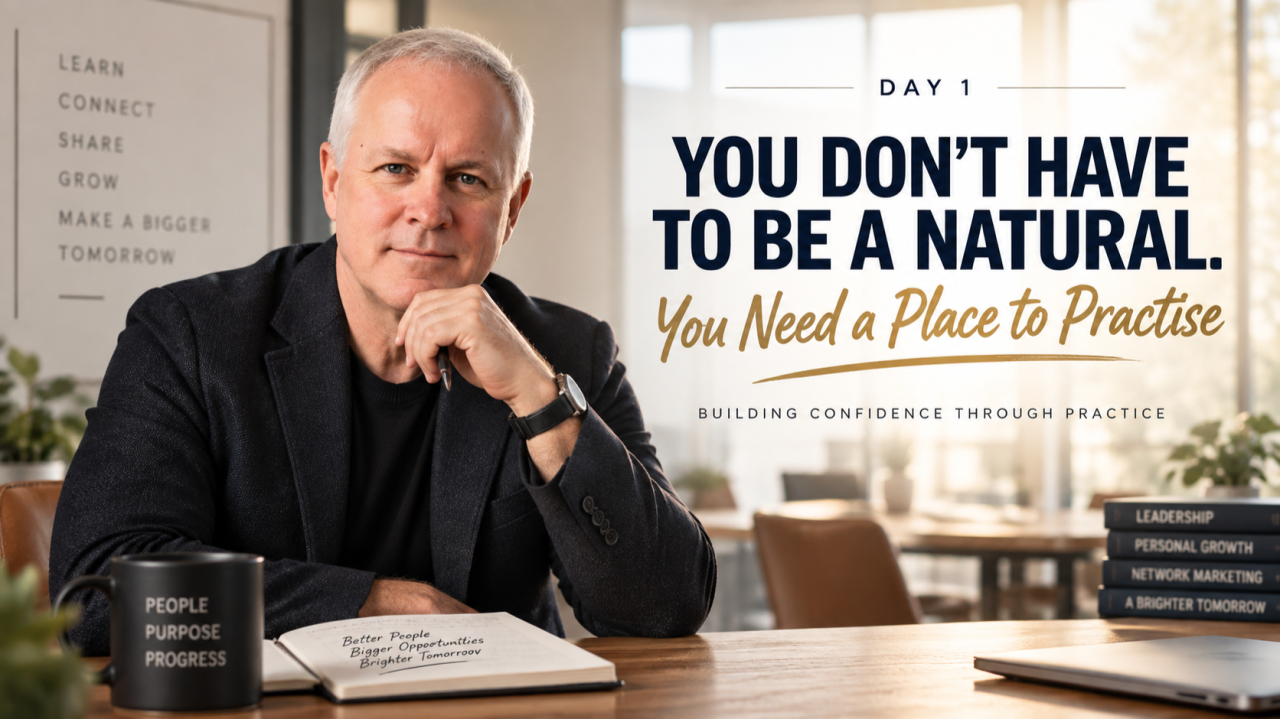
Personal development becomes especially meaningful when it is connected to that kind of practice. Consider someone who has always been uncomfortable introducing themselves. Learning to begin a relevant conversation is a genuine achievement. So is explaining an idea without rambling, asking a question and listening carefully to the answer, or handling a refusal without allowing it to determine the rest of the day. These abilities can be practised and improved. Confidence has firmer ground beneath it when a person can look back and identify something they are now able to do that once felt beyond them.
The quality of the people around that person can make a considerable difference to the learning experience. Encouragement is welcome, but useful mentoring requires attention. It involves listening to an explanation and helping clarify the confusing part, preparing someone for a conversation, and reviewing what happened afterward without turning every difficulty into a judgment of their character. A beginner deserves more than instructions to remain positive. They need a place to take a specific question and receive an answer they can put to work.
That is the kind of team environment I am interested in developing. I want room for people to be ambitious without pretending to be accomplished in areas they are still learning. Someone should be able to say that they want to lead a team, become a stronger communicator, or eventually speak to a larger audience without feeling embarrassed for naming the goal. Once the ambition has been expressed, the useful question is what preparation it requires. A person who hopes to address a room can begin by learning to explain one worthwhile idea clearly to another person.
I take that approach to my own ambitions. I want to grow as a mentor, trainer, and speaker, and I recognize that those aspirations carry an obligation to develop something worth offering. The work begins long before a larger platform appears. It begins in preparation, in the care taken with an explanation, and in whether another person leaves a conversation with greater understanding. An audience may provide visibility, but the substance has to be developed through study, practice, and a willingness to keep learning.

“We can be beginners in a particular field without being beginners at life.”
Capt. Solomon D. Crowe
Prepare people to lead
My work as an airline captain influences how I think about leadership. I value preparation, clear communication, and people who are willing to contribute what they know. I want questions raised while there is time to consider them. I want uncertainty acknowledged rather than concealed behind confidence. Those preferences carry into the business team I want to build. Leadership should help people understand their responsibilities and become increasingly capable of carrying them. A team that depends indefinitely on one person’s energy has not yet developed the strength available within its members.
This also shapes what I mean by a success mindset. I am interested in a way of thinking that helps a person prepare, take action, evaluate the result, and make a considered adjustment. When something does not work, there should be enough curiosity to examine why. Perhaps the explanation was unclear, the timing was unsuitable, or the product was not relevant to that customer. Perhaps a skill needs further practice. A constructive mindset keeps us available for those lessons. It does not require us to describe every setback as a victory or defend an approach simply because we have already invested effort in it.
Bring your experience with you
For people further into their working lives, there is another question worth addressing: whether beginning something new means starting from nothing. I do not believe it does. Someone who has spent years managing responsibilities, serving customers, raising children, or learning a demanding profession brings experience that deserves recognition. A new business will require new knowledge, but it does not erase what a person already understands about patience, reliability, and dealing with people. We can be beginners in a particular field without being beginners at life.
I find that possibility encouraging. An experienced professional may have more to bring to a new undertaking than they initially recognize, even while needing help with unfamiliar tasks. A younger person may approach those same tasks with a different perspective and useful confidence. A thoughtful team makes room for both. It allows people to contribute their strengths without making them ashamed of the areas in which they need instruction. That creates the possibility of learning in several directions rather than assuming that insight belongs exclusively to whoever has been there longest.
Make an informed decision
Of course, a sound business conversation must also include the practical details. Products, customer demand, expenses, time requirements, and compensation all deserve plain discussion. An opportunity should be evaluated against the realities of a person’s life, not simply the enthusiasm of the person presenting it. Neither effort nor a positive attitude guarantees a profit. I regard those considerations as part of taking business seriously. The appeal of building something becomes more substantial when people understand what they are considering and can make an informed decision about whether it suits them.
For someone who already has a career or family responsibilities, that evaluation includes deciding what time can realistically be committed. A plan that depends on neglecting existing obligations is not one I would encourage. I would rather begin with an honest schedule and clear expectations than an impressive declaration that cannot be sustained. There is dignity in a modest beginning approached professionally. Learning the work, keeping commitments, and reviewing progress give a person a better basis for deciding what to do next.

Consider your next chapter
These are the standards I am working toward as I build my own network marketing business and team. I am interested in people who want to learn, serve customers well, strengthen their communication, and contribute to the development of others. I am not looking for everyone to arrive with the same personality or ambitions. A thoughtful question, a willingness to practise, and the discipline to follow through are valuable qualities. So is the honesty to say, “I do not understand this yet,” and remain engaged long enough to learn.
The question, then, is not whether your present career is good enough. It is whether there is something else you are ready to give thoughtful attention to. You are allowed to appreciate what you have built and remain curious about what you could develop next. Your existing responsibilities deserve respect, and your future deserves consideration. There may be a business to explore, a skill to develop, or a contribution you have postponed because you assumed it belonged to an earlier stage of life. It is worth examining that assumption before allowing it to make the decision for you.
For professionals exploring that possibility, I welcome a conversation about the network marketing business I am building and the team culture I am working to create. Message me here on LinkedIn. We can discuss your goals, the company and products, the costs and work involved, and whether there is a sensible fit. You do not need a polished presentation or a decision already made. A genuine interest in learning is enough to begin a conversation about what your next chapter might involve.
Put the idea into practice.
Choose a skill in the free Five-Day Field Plan, or explore how network marketing works before deciding whether it fits you.
What does this bring to mind?
Send Solomon your thoughts or a question from the story.
Talk about this article