Smart choices · Health journal
Before the first scoop, read the label
The most useful nutrition information is often the least glamorous. Here’s how to bring serving sizes, ingredients, and your own priorities into the same conversation.
By Capt. Solomon D. Crowe
·3 min read
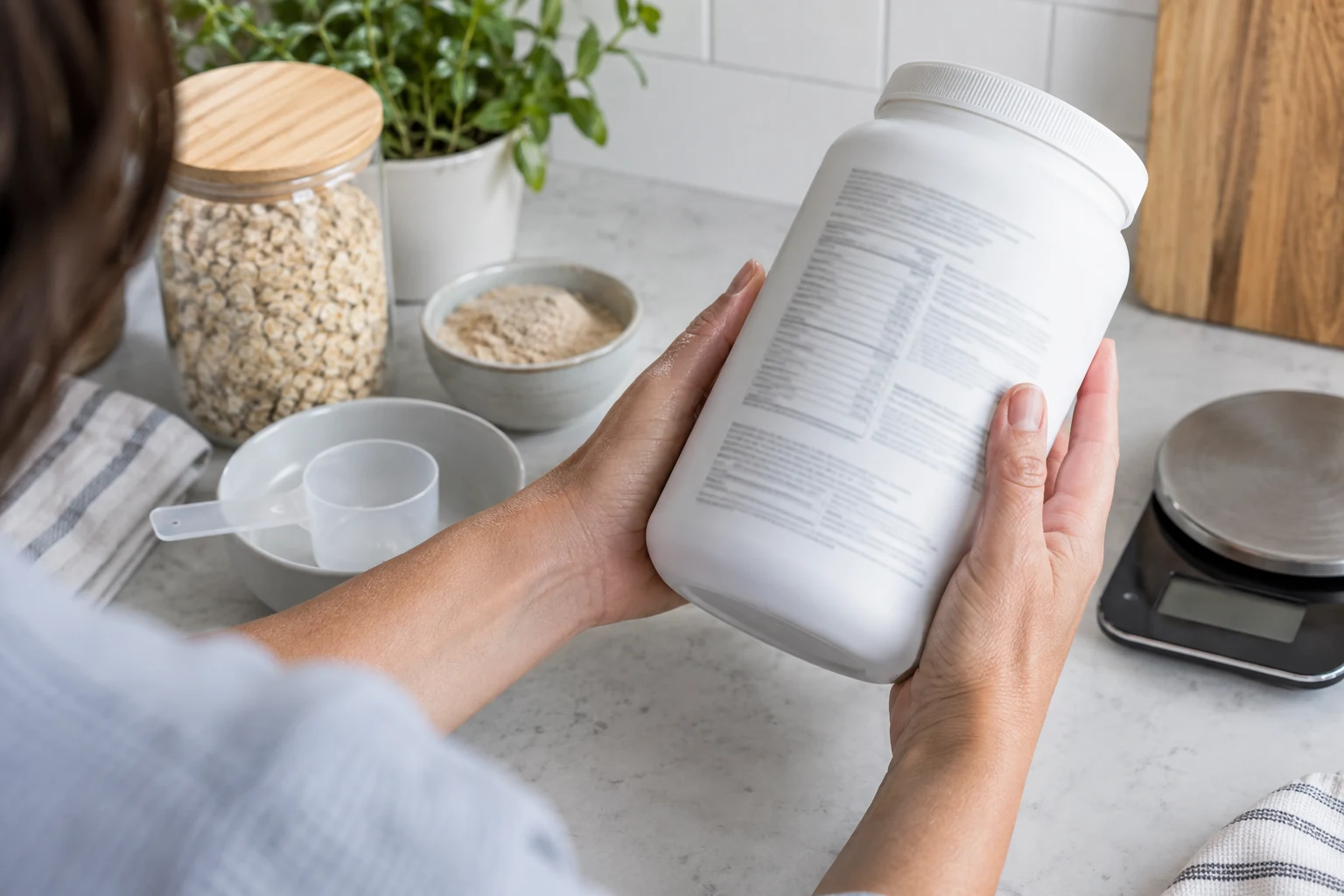
A familiar package invites a familiar movement: open the lid, reach for the scoop, and carry on. That convenience is part of its appeal. But when we become comfortable with a product, we can stop looking at the information that tells us how to use it.
Reading a label is a practical skill for an ordinary kitchen. It helps turn a recipe, a recommendation, or an attractive claim into something you can compare with your own needs. You do not have to study every nutrient at once. Begin with the questions that affect what you are about to prepare.
Check what the numbers describe
Start by checking whether the Nutrition Facts figures describe one serving or the whole package. The FDA advises comparing the stated serving with the amount you actually eat. If your portion is twice a listed single serving, the calories and nutrient amounts are twice the listed amounts too. A serving size describes a reference quantity; it is not a recommendation of how much you should eat.[1]
For example, imagine a fictional product listing 8 grams of a nutrient per 30-gram serving. A 60-gram portion supplies 16 grams of that nutrient. The arithmetic is simple, but it changes the comparison. Read the serving units before deciding that one package offers more or less than another.[1]
In a blender recipe, the powder is only one ingredient. Check whether the nutrition figures describe the powder as sold or a drink prepared with specified additions. Milk, fruit, yogurt, nut butter, and other ingredients you add affect the finished drink; include anything not already covered by the label’s prepared values.[5]
Choose a useful comparison
On US labels, the FDA uses 5% Daily Value or less as a guide to a low amount and 20% or more as a guide to a high amount. In Canada, the high benchmark is 15%. The ingredient list provides different information, listing ingredients in descending order by weight. Read the label for your market and use these details together rather than relying on a single claim on the front.[6][2]
Decide what you are comparing before making a judgment. You might be looking for more fiber in a breakfast choice, or checking sodium between two similar soups. Put comparable servings alongside each other and keep the whole food in view. One appealing number does not settle every question about a meal.
Give familiar products a fresh look
An Isagenix Health article about a packaging change provides a useful example: changes to scoops meant some preparation directions changed too. Its enduring lesson is to check the instructions supplied with the actual product. An old scoop, saved screenshot, or remembered recipe may describe a different version.[3]
Use the current label for the exact product and market you are buying from. A US shopper should check the US product; a Canadian shopper should check the Canadian version. Flavor, formula, and preparation instructions can differ. If a package and a recipe disagree, pause and resolve the difference before preparing it. A clear question is more useful than a confident guess.
Allergies make that fresh check particularly important. The FDA advises reading the full ingredient information every time, even for a familiar purchase, because ingredients can change. Check any contains or may-contain statements too; the latter are voluntary in the US. If you are unsure whether a product contains your allergen, contact the manufacturer rather than assuming it is suitable.[4]
Make knowledge part of the routine
There is no prize for memorizing a cupboard full of labels. The useful habit is to look again when something changes: a new flavor, a different package, a recipe substitution, or a guest with an allergy. Make room for that check in the same way you make room for washing the blender.
Understanding what you prepare allows convenience and care to work together. The label becomes a tool you can return to, and the kitchen becomes a place where an informed decision is part of the everyday rhythm.
Sources & further reading
Original 10X Through the Fire editorial, informed by the sources below. Isagenix Health provides company-published information for the US market. For current product details, visit Solomon’s Isagenix store and check the label for your country; availability, formulas, and directions can differ. References identify the material reviewed on September 12, 2026.
- 1.Serving Size on the Nutrition Facts Label
US Food and Drug Administration · Public health guidance
- 2.Use food labels
Health Canada · Public health guidance
- 3.What’s the Scoop on the Fiber Scoop?
Isagenix Health · Company perspective
- 4.Have Food Allergies? Read the Label
US Food and Drug Administration · Public health guidance
- 5.Nutrition Facts table: Foods requiring preparation
Canadian Food Inspection Agency · Public health guidance
- 6.The Lows and Highs of Percent Daily Value on the Nutrition Facts Label
US Food and Drug Administration · Public health guidance
General education, not individual medical advice. Personal needs differ. Solomon is an Isagenix Independent Associate and may receive compensation from qualifying purchases. Health and business disclosures.