
Digestive health · Health journal
Digestive health starts with an ordinary grocery basket
Fiber, variety and gradual changes can bring the conversation about gut health back to useful everyday choices.
By Capt. Solomon D. Crowe
·3 min read
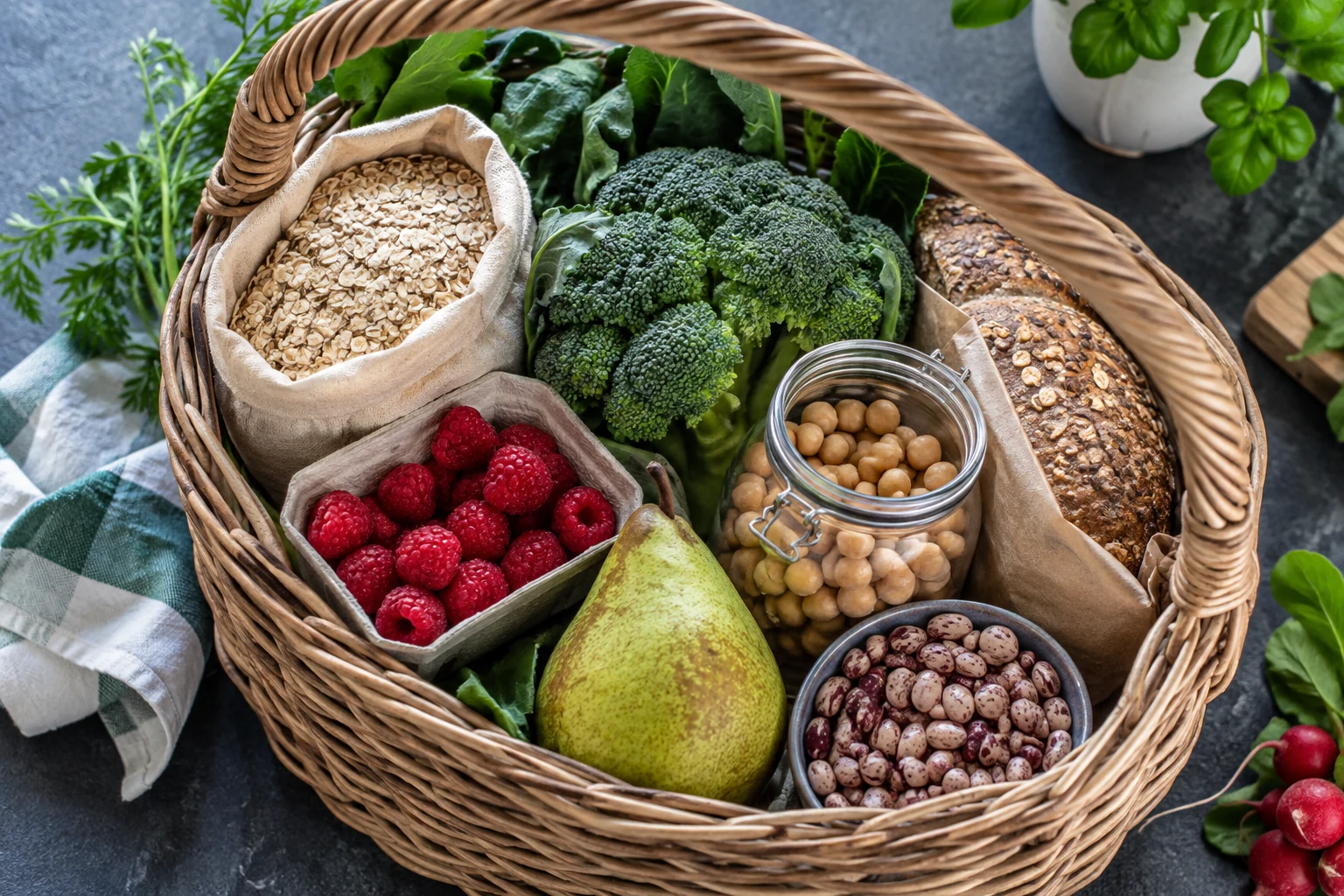
Picture a grocery basket holding oats, a bag of frozen vegetables, a few pears and a tin of beans. It is an ordinary collection, the sort you might carry home on a Tuesday. The interesting question is what you will make with it. When digestive health becomes another complicated project on an already crowded schedule, familiar ingredients offer somewhere concrete to begin.
Isagenix Health’s fiber article highlights gradual changes, fluids, and varied fiber sources. Public-health guidance also supports gradual changes and adequate fluids. They offer a useful starting point for thinking about the shopping list and the meals it needs to support.[1][4]
Understand the ingredient
Fiber is the portion of plant foods that the body cannot digest. It occurs in fruit, vegetables, whole grains, legumes, nuts and seeds. HealthLink BC explains that most fiber-containing foods provide a mixture of soluble and insoluble fiber. Insoluble fiber can help prevent constipation; soluble fiber can help manage blood cholesterol and blood sugar. These different roles are a reason to look across several food groups when planning meals. The ingredient does useful work without needing an extraordinary reputation.[2]
Begin with a meal you already know how to make. Perhaps breakfast is the easiest place to change an ingredient, or perhaps your usual soup gives you more room to experiment. Choose the opening that feels practical in your kitchen. A useful first step should be easy to describe when somebody asks what is for dinner.
Let variety fit your life
An eating pattern is built from the foods and drinks you regularly choose. Give vegetables, fruit, whole grains, and protein foods a place in meals that suit your taste, culture, budget, and lifestyle. Put that into practice by varying something within a familiar meal: choose a different vegetable for a favorite curry, try whole-grain pasta in a sauce you already make, or use lentils in a dish that usually contains meat. You can keep a favorite recipe in rotation while changing one element. Variety can grow from the food traditions and cooking skills already in your household.[3]
Ask the people who share the table which version they would like again. Their answers are useful information for the next shopping list. An ingredient earns a lasting place when somebody knows what to do with it and looks forward to eating it.
Allow time for the change
Increase fiber gradually. HealthLink BC warns that a sudden increase can cause gas and bloating, and explains that fiber and fluids work together to keep stools soft and easier to pass. Keep drinking fluids as you make changes; water is a good choice. The same guidance recognizes that certain medical conditions may require less fiber, so follow any advice already provided by your care team. Digestive symptoms also deserve appropriate attention: constipation accompanied by blood in the stool, abdominal pain or swelling, vomiting or unexplained weight loss is a reason to see a health care provider.[4]
Treat your first change as something to observe over time. Give the new ingredient room to become familiar. You might try it in the same meal a few times, learning how it fits the cooking, the budget and the people at the table.
Make the label useful
For packaged foods, check fiber in the Nutrition Facts table and compare the serving sizes. On US labels, the FDA’s guide is 5% Daily Value or less for a low amount and 20% or more for a high amount. Canadian guidance uses 15% or more as its high benchmark. Use the convention that matches the label you are reading.[5][2]
Then bring the decision back to dinner. Which ingredient will you use first? Who can help prepare it? Where does it belong in the week? Those questions turn a good intention into something tangible. Over time, your own repertoire can grow: another breakfast, another soup, another way to cook vegetables. An ordinary grocery basket has plenty of room for that kind of progress.
Sources & further reading
Original 10X Through the Fire editorial, informed by the sources below. Isagenix Health provides company-published information for the US market. For current product details, visit Solomon’s Isagenix store and check the label for your country; availability, formulas, and directions can differ. References identify the material reviewed on September 12, 2026.
- 1.Fiber: Are You Getting Enough?
Isagenix Health · Company perspective
- 2.Fibre and your health
HealthLink BC · Public health guidance
- 3.Eat a variety of healthy foods
Health Canada · Public health guidance
- 4.Managing constipation with diet: Adults
HealthLink BC · Public health guidance
- 5.The Lows and Highs of Percent Daily Value on the Nutrition Facts Label
US Food and Drug Administration · Public health guidance
General education, not individual medical advice. Personal needs differ. Solomon is an Isagenix Independent Associate and may receive compensation from qualifying purchases. Health and business disclosures.